Monday, July 5, 2010

Meeting young beneficiaries delightful

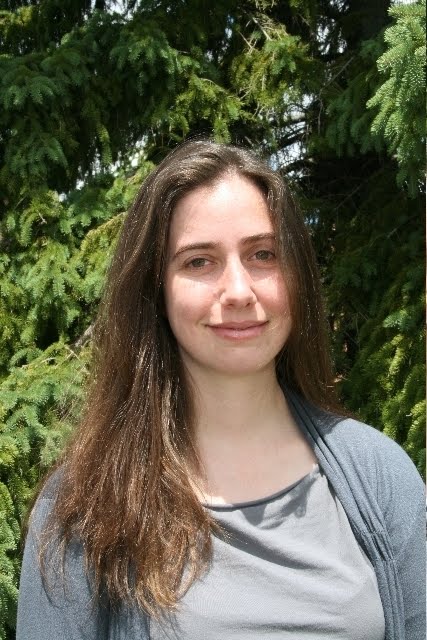
YouthInvest finance manager Fatima Zohra Boukhnifi, this week's guest blogger, reports from her office in Casablanca on her recent visit to the field.

I have been working for MEDA Maroc since May 2009 as a finance and administration manager. For a year, I have been working in the office, getting regular reports from the field, but I couldn’t imagine how it really was until I got the opportunity to do a field visit to two of our partner NGOs.

In Boudenib, as in Ouarzazate, we attended some training sessions and we met members of the boards and some of the trainers, who showed a great enthusiasm and a remarkable sense of commitment. I was so happy to see that they have absorbed the philosophy of our training material and could transmit it to the youth.

But I was extremely delighted when I met the young beneficiaries, who were excited to talk about their experiences.

Safa, Rachid, Abdellah, Abdessamad, Mahjoub and many others found that 100 Hours to Success changed their lives. Thanks to this program, they have learned many techniques and are applying them in their daily lives. They have become more self-confident, more communicative, more assertive, and have earned the respect of their relatives and friends. They also are developing entrepreneurship skills and many of them feel able to set up their own businesses.

At the end of my trip, I was amazingly impressed by our program's impact on the youth and felt really proud of belonging to MEDA Maroc and contributing, even indirectly, to the success of this program.

Pictured: Fatima Zohra Boukhnifi, standing at centre, with MEDA Maroc staff

Wednesday, June 30, 2010

You don't need to be rich to save

Leah Katerberg, this week's guest blogger, shares some experiences of a YouthInvest training session from her recent trip to Morocco.

I’m in Morocco to conduct our annual survey, but we’ve adjourned for the day and I’ve decided to sit in on a training session for 100 Hours to Success. The youth are just beginning the module on saving. Let me show you what they’re learning:

The trainer starts by guiding them in a discussion on the general goals of saving. All contributions are posted on the wall, and together the youth categorize them into three broad uses for savings:
1. Events (eg. wedding)
2. Unknown future expenses (eg. appliance repair)
3. Business opportunity (income generation)

The youth are now formed into groups of about five, each representing a family, and are provided relevant information on the family’s assets, expenses, income, and also a set of challenges to solve.

For example, the family’s father may have been diagnosed with a hearing problem, so the family must save for the purchase of a hearing aid; the oldest daughter is graduating from high school next year and would like to pursue college-level education; the mother owns a sewing business and has had to turn down certain types of work because of the limitations of her machine.

Together, each ‘family’ decides how much they can save per month based on their current situation. The youth understand this often requires sacrifice in expenditures, however some groups’ creativity went beyond fewer visits to the internet cafĂ©: “We will sell one of our cows, we can negotiate lower rent with our landlord, we will start a small garden plot and sell vegetables to our neighbors.” Continuing the example above, let’s say our group determines it will be able to save 300 dirhams per month (about $35).

Next, each group completes a savings plan template to enable them to reach their goals. Our group’s looks something like this:


At 300 dirhams per month, the hearing aid can be purchased in less than half a year. Then, the family can start saving for the first year of college for the oldest daughter, which will take about eight months. Once those two goals have been achieved, saving can begin for the sewing machine. Likely, the additional income generated by the new machine will help the family save for subsequent years of college.

As each group confidently shares its plan the twofold message becomes clear: Saving is powerful, and you don’t need to be rich to save.

Tuesday, June 22, 2010

Learning about Moroccan tea culture

This week's guest blog is from Jennifer Harley of MEDA Financial Services, who recently returned from Morocco.

Morocco is well known for its dramatic landscapes and delectable food offerings. But Moroccans are perhaps under-recognized for their deep appreciation for tea. Chinese green tea is a staple of Moroccan culture.

The preparation, sharing and drinking of tea in all regions of the country has, over the past 200 years, become a tradition turned art form. Morocco is cited as being the first cou
ntry ever to import to Chinese green tea and is now one of the biggest importers in the world.

The most exciting part of the tea ceremony is the pour – in fact, the repeated pouring. In order to aerate the tea, the tea maker will pour a full glass holding the pot several inches in the air and then pour the glass back into the pot.
(Watch my video here: http://zook.ca/morocco/ )

This method produces a sort of bubbly foam on the top of the tea and ensures that the sugar is thoroughly mixed. Finally, everyone drinks. The show is so captivating that one hardly notices the wait.

Monday, June 7, 2010

Change among youth motivates Mustapha to do more

This week's guest blogger, project manager Jennifer Denomy, reports from Morocco where she continues to introduce us to some of MEDA Morocco's staff members.

After YouthInvest started field activities last year, local project manager Mustapha Ouchrahou had many questions: How would the partners work? How would they deliver the training? What would the impact be and how would youth react?

The first training sessions happened with secondary school students in Boudnib, a small town near Errachidia in the south east of Morocco. "I met with some of the youth and heard their stories," says Mustapha.

"They said that the training had given them an entirely new attitude, new skills and a greater sense of self-confidence. There was a real change in their way of thinking. They discussed calmly how things were going at school and how they had begun to negotiate their needs with the administration.


"I could really see that there was a difference. It was very touching. Now we are so motivated to do more because of the change we see.”


Giving youth "something that changes their lives"

This week's guest blogger, project manager Jennifer Denomy, reports from Morocco where she continues to introduce us to some of MEDA Morocco's staff members.

Monitoring and evaluation manager Khadija Saoudi often travels to the field, meeting with partners and beneficiaries. In rural areas where MEDA Maroc works, youth have no other programs or training they can access. These are neglected areas in terms of social services.

"Our program is interactive and allows youth to meet in groups to learn things – a new concept for many of them," reports Khadija. "When they begin the training, they love participating and learning with peers and do not want the classes to end. They ask if there is more training they can do and say “don’t forget us!”

"One of my favorite things is to talk to youth after they start the 100 Hours to Success training. They greet the trainer in the street and talk about how much they have learned in the classes. They are excited to report that they taught their family members to do the things they learned.

“I feel like we give them something that changes their lives. It’s a huge change, especially for the girls.” Khadija says that before receiving the training, youth describe living their lives “as it goes,” but now they have objectives and know how to motivate themselves to achieve what they want to do. They don’t stay at home until they get married, but have direction and purpose.

Unfortunately, many girls encounter opposition to plans they develop, because starting a business might require them to do things that go against local traditions. It's difficult for them to travel for work or to buy supplies for their business. But they know how to save and to create small enterprises. Some girls have overcome barriers and we will continue to encourage them.

Tuesday, June 1, 2010

Meet the YouthInvest staff! Here's Fatima Zohra …

This week's guest blogger, project manager Jennifer Denomy, reports from Morocco where she will be introducing us to some of the MEDA Morocco staff members over the coming weeks.

Being part of an inspiring program such as YouthInvest is bringing proud moments for project staff.

YouthInvest finance manager Fatima Zohra Boukhnifi felt one of those bursts of pride in April, when a group of youth “graduates” of the 100 Hour to Success program were interviewed by reporters and the project was featured on a national Moroccan news program.

"When I saw the interview on television, I felt so proud and told everyone I knew that I work on this project. I feel very connected to the work and to the beneficiaries."

Fatima Zohra also finds it rewarding to be part of the interaction between MEDA Maroc and MEDA headquarters in Waterloo, Canada. When there are accounting difficulties, she reaches out to HQ staff and feels she is not working alone. “We are supported and it’s very motivating,” she says.

MEDA’s deadlines are tighter than those in other places she has worked, and with HQ support, she is learning to prepare financial statements and reports more quickly.

Although everyone in the MEDA Maroc office works on different tasks and in different areas, decisions are made together. Everyone contributes and this makes the team very strong.

Fatima Zohra is now taking her first YouthInvest field visit and we look forward to hearing about her trip as she sees first hand what youth are learning in our project.

Wednesday, May 26, 2010

YouthInvest by the numbers

MEDA's YouthInvest project is making great progress in reaching out to unemployed youth in Morocco, reports project manager Jennifer Denomy, who is currently on a two-week field visit to Morocco.

For instance, youth are being encouraged to begin saving for their future. To date, 587 youth savings accounts have been opened with MEDA's partner financial institutions.

And MEDA is reaching out to many more youth with its 100 Hours to Success training program as it continues to scale up. Currently, 1,309 youth are enrolled in training and 554 have completed courses.

Partner financial institutions are piloting youth loan projects. Interested clients participate in eight hours of training, then apply for a loan to start or build a small business for themselves. The average loan size is 8,000 Moroccan Dirhams, or about $900.

MEDA is getting the word out about YouthInvest through awareness-raising sessions in high schools, youth centers and community centers to attract young people to the training.

A current priority is to expand YouthInvest to Egypt, and MEDA is finalizing partnership agreements with local banking institutions and NGOs. Recent research, including focus groups with youth, parents and community leaders and partners, will ensure that the program is tailored to the particular needs of the Egyptian community.

Watch this space for reports from the field!